Flikweert Vision, based in Zeeland in the south-west Netherlands, builds the QualityGrader as an optical sorter for seed, washed and unwashed potatoes as well as onions. In its upgraded generation, an optional second ejection unit lets the machine separate more than one product stream, and an optional RejectSeparator removes stones and clods from the rejected flow for a three-way split.
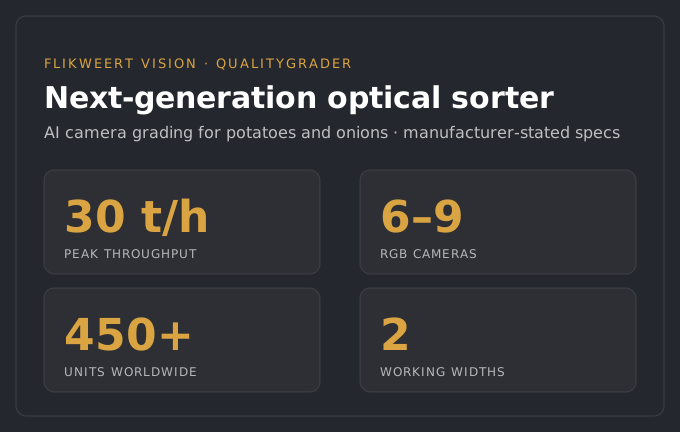
- 30 t/h
- Peak throughput (manufacturer-stated)
- 6–9
- RGB cameras per machine
- 450+
- Units deployed worldwide (company-stated)
- 2
- Working widths
Industrial RGB cameras image each potato or onion several times from different angles — 6 or 9 cameras depending on configuration — and AI models score every object against tolerances the operator sets for each defect, returning an accept-or-reject decision. Flikweert Vision says those models are trained specifically on potatoes, onions and their quality deviations, drawing on data from its installed machines.
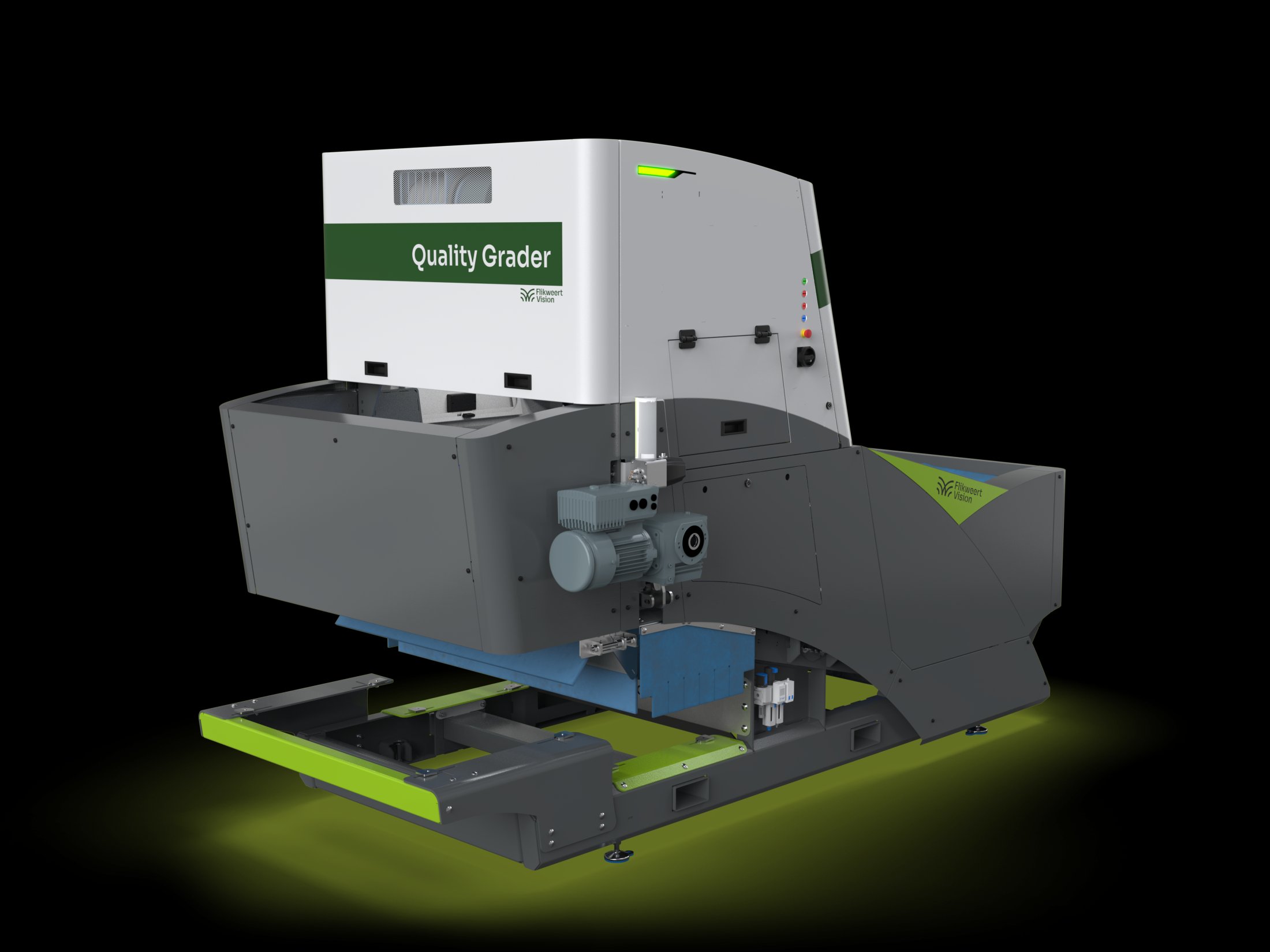
QualityGrader — manufacturer-stated specifications
- Crops
- Potatoes (seed, washed, unwashed) and onions
- Capacity
- Up to 30 t/h
- Working widths
- Two
- Cameras
- 6 or 9 industrial RGB
- Product streams
- Multiple (optional second ejection unit)
- Stone / clod removal
- Optional RejectSeparator (three-way separation)
- Footprint
- 340 × 157 × 234 cm
- Installed base
- 450+ units worldwide (company-stated)
The company reports more than 450 sorting machines running worldwide and describes the unit as the most compact in its class, at 340 × 157 × 234 cm — a footprint it says fits existing sorting lines without major modification. It positions the sorter from individual growers through processors to industrial lines, and offers a separate Divider optical pre-sorter alongside it.
Why it matters for the industry
Manual grading of seed potatoes and onions is labour-intensive and uneven. Automated optical sorting offers steadier quality control at lower labour input — and for supply chains weighing the switch, throughput, footprint and defect coverage are the figures that decide whether a machine fits a line.
