A french fry's worst enemy is time. Minutes after it leaves the fryer, moisture migrates to the surface, the crust softens, and a once-crisp fry turns limp. For most of fry history that was simply the nature of the product. Now, with delivery routinely putting 15 to 30 minutes between fryer and mouth — and home air-fryers cooking fries in a different way than the deep-fryers they were designed for — that softening has become a commercial problem worth engineering against.
The answer is a thin layer most eaters never notice: a starch-based coating, applied to the cut potato before par-frying and freezing.
What the coating does
Standard frozen fries rely on the potato's own surface starch to crisp up. Coated fries add an engineered outer layer — anything from a near-invisible "clear coat" film to a more pronounced batter. That layer forms a barrier against moisture migration, holding crispness and heat far longer after the final cook. (Coated fries are one of the fastest-moving categories among the frozen potato product types processors now offer.)
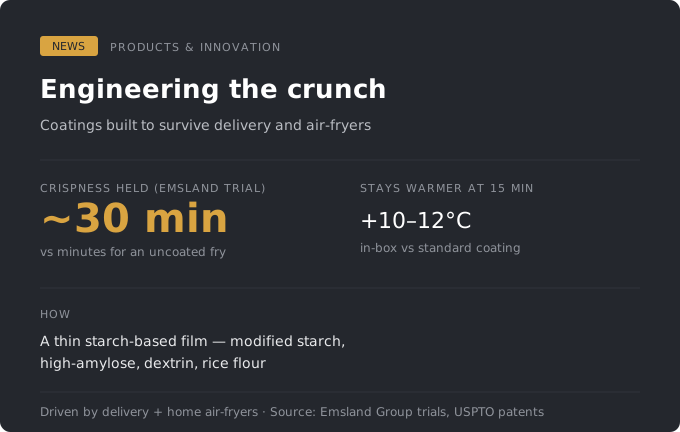
The trial data is concrete. Coating maker Emsland Group published results showing fries with its Embat coating retained peak surface crispness for up to about 30 minutes, and stayed roughly 10–12°C warmer after 15 minutes of storage in a box than fries with standard coating formulations. For a delivery order, that is the difference between a crisp fry and a soggy one on arrival.
Decades of quiet chemistry
The coating may be new to consumers, but the science is mature. A long trail of patents documents the chemistry: systems combining modified potato and corn starches, high-amylose starch, dextrin, and rice flour, tuned for adhesion, crispness and hold. The persistent patent activity over decades is itself evidence of how much value processors place on solving the soggy-fry problem.
The catch: equipment
Coatings aren't free to adopt. Applying them evenly requires dedicated wet-coating equipment integrated into the line ahead of the continuous fryer. That capital requirement helps explain why coated products tend to sit at a premium tier and are more common among the larger processors — and it ties the trend back to the broader pattern of capacity and technology investment shaping who competes at the top of the sector.
TakeawayThe takeaway for the industry: as the eating occasion shifts further toward delivery and air-frying, the humble coating moves from a nice-to-have to a competitive necessity — and the processors who master it own the channels where soggy fries lose customers.
Sourcing: trial figures are from coating maker Emsland Group's published results; coating chemistry is documented in US patents; equipment context from a fryer manufacturer — all listed in Sources. Performance figures are vendor/trial-reported and vary by formulation and cooking method.
