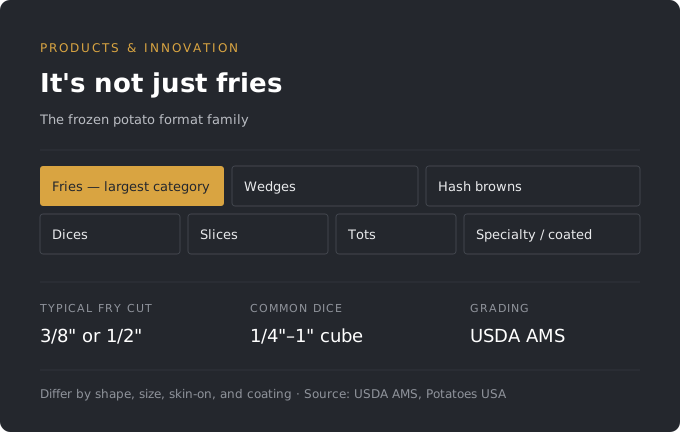
The main frozen potato formats
"Frozen fries" is shorthand for a category that is far broader than a single product. A processor's range typically spans a dozen distinct formats, each defined by shape, size, skin, and coating — and each suited to different uses in quick-service restaurants, casual dining, institutional catering, and retail. This page is a plain reference to the main types and what sets them apart. (For the manufacturing line that turns raw potatoes into these products, see our companion pillar on how frozen french fries are made.)
In the United States, many of these products are graded against USDA Agricultural Marketing Service specifications, which is why you'll see designations like "Grade A" or, for fries, "Extra Long Fancy" on foodservice packaging.
Fries
The largest category, and itself a family of cuts:
- Straight-cut — the classic square-section fry, commonly 3/8" or 1/2". The foodservice workhorse, available skin-on or skin-off, plain or coated.
- Crinkle-cut — a ridged, wavy profile that adds surface area for extra crispness and better sauce-holding. Crinkle cuts give strong plate coverage and are a pub and appetiser favourite.
- Shoestring — very thin fries; fast-cooking and high-yield.
- Steak / thick-cut — chunky fries with a higher potato-to-surface ratio and a softer interior.
- Curly — spiral-cut, often seasoned; a premium, promotional item that commands higher menu prices.
- Waffle / lattice — cross-hatched rounds, distinctive and dippable.
Fries can be plain, seasoned, roasted, skin-on or skin-off, and increasingly carry a coating (see below).
Wedges
Thick, wedge-shaped pieces cut on the lengthwise axis, usually skin-on and often seasoned. Larger and heartier than fries, wedges read as a more "homestyle" or premium side and are popular in casual dining and pubs.
Hash browns
Made from shredded or finely diced potato, hash browns come as loose shreds, formed patties, or "country-style" diced cubes (roughly 3/8" to 1"). A breakfast and foodservice staple, and one of the faster-growing formats as all-day breakfast spreads.
Dices and slices
- Dices — cubes, commonly 1/4" to 1", used in breakfast hash, soups, stews, gratins, and skillet dishes. As IQF (individually quick frozen) products they pour freely and deliver year-round consistency while cutting kitchen labour.
- Slices — thin rounds for scalloped potatoes and gratins. Like dices, they save the prep time of cutting fresh potatoes.
Tots and formed products
Tater-style tots are bite-sized cylinders formed from shredded potato (sometimes with added starch or seasoning), with a crisp exterior and soft interior. Along with other formed/extruded shapes, they let processors use potato that wouldn't yield long straight strips, improving overall utilisation.
Specialty and coated products
The fastest-moving innovation area:
- Coated fries carry a thin, usually starch-based batter applied before freezing. Coatings improve crispness, extend holding time (how long a fry stays crisp after cooking — critical for delivery and drive-thru), and can deliver seasoning.
- Air-fryer-optimised formats are engineered to crisp well in home air fryers, a category that has grown sharply with air-fryer adoption.
- Specialty cuts (basket-weave, tri-cut, O'Brien blends with vegetables) and skin-on rustic styles round out premium and differentiated ranges.
How buyers choose
For a foodservice operator, the choice between formats comes down to a few practical levers: yield (servings per case — where length grades and cut style matter), holding time (how the product survives the trip from fryer to table or doorstep), labour (IQF dices and slices versus fresh prep), menu positioning (curly and skin-on wedges as premium; straight-cut as the dependable default), and final-cooking method (deep-fry, oven, or air-fry, each matched to a different product spec).
Methodology: definitions and cut/size references draw on the USDA Agricultural Marketing Service frozen-potato commodity specification and Potatoes USA (US Potato Board) product references, listed in Sources. Exact dimensions, coatings, and grades vary by producer and market.
