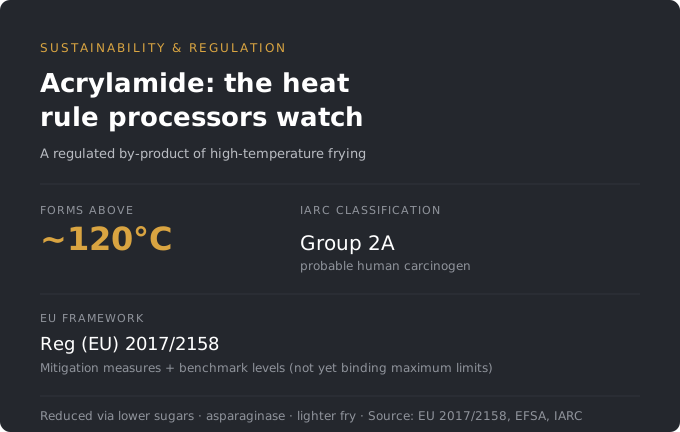
What acrylamide is — and why fries are in the frame
Acrylamide is a chemical contaminant that forms naturally when starchy foods are cooked at high temperatures — above roughly 120°C — through a reaction between the amino acid asparagine and reducing sugars in the food. It is not added; it is created by the cooking itself. Frying, roasting and baking all produce it, which is why french fries, potato crisps, bread crusts, breakfast cereals and coffee are the foods most associated with it.
It matters because acrylamide is classified by the International Agency for Research on Cancer as a probable human carcinogen (Group 2A) and is genotoxic — it can damage DNA. EFSA confirmed in 2015 that dietary acrylamide potentially increases cancer risk across age groups. For an industry built on frying potatoes, that makes acrylamide a central food-safety and regulatory issue.
The EU framework: Regulation 2017/2158
The reference regulation worldwide is Commission Regulation (EU) 2017/2158, in force since 2018. It requires food business operators — processors, fast-food chains and restaurants alike — to:
- apply defined mitigation measures appropriate to their product and process;
- keep acrylamide as low as reasonably achievable (the ALARA principle); and
- stay below benchmark levels set for categories including french fries and potato crisps, providing data to demonstrate compliance.
Obligations scale with size — they are more onerous for large operators — and the measures must be built into the business's food-safety management system. For frozen potato products specifically, following the stated cooking instructions is itself treated as a mitigation step, since final-cook colour and temperature strongly affect acrylamide.
Benchmarks, not (yet) binding limits
An important nuance: the EU's benchmark levels are indicative targets, not legally binding maximum limits. The regulation mandates mitigation and sets benchmarks, but it does not (yet) prohibit exceeding them outright. This gap has drawn criticism: consumer-safety groups such as Safe Food Advocacy Europe have pressed the European Commission and EFSA to set legally binding maximum levels, particularly for foods eaten by infants and young children, arguing the current benchmarks have proven insufficient. Monitoring studies have repeatedly found products exceeding benchmarks, keeping pressure on regulators to tighten the regime.
The direction of travel, then, is toward stricter rules — potentially hard maximum limits layered on top of the existing benchmarks — which processors should plan for.
How producers reduce acrylamide
Mitigation happens across the whole chain, from field to fryer:
- Variety and storage. Choosing low-sugar potato varieties and avoiding cold-induced sweetening in storage keeps the sugar side of the reaction down.
- Blanching. Washing out surface sugars before frying — already a standard processing step — directly lowers acrylamide potential.
- Asparaginase. This enzyme breaks down asparagine before cooking; industrial trials have shown very large reductions (in some product studies, on the order of 74–100%), making it one of the most effective tools available.
- Cook control. Frying to a lighter colour endpoint and managing temperature and time limits formation — which is why "golden, not brown" guidance and colour guides appear in the regulation.
Several major processors have gone further, including breeding or engineering lower-acrylamide potatoes and marketing low-acrylamide product lines as a point of differentiation.
What it means for the industry
Acrylamide sits at the intersection of food safety, regulation, agronomy, and processing technology — which is why it touches almost every part of this sector. The practical takeaways: the EU regime is the global benchmark and is likely to tighten; mitigation is a chain-wide discipline, not a single fix; and variety selection and storage (covered in our potato varieties for frozen fries coverage) are upstream levers on a downstream safety problem. Producers selling into the EU — and increasingly elsewhere — need documented mitigation, not just compliant test results.
Methodology: regulatory detail is drawn from the primary EU legislation (Regulation (EU) 2017/2158 via EUR-Lex and the retained-law text), EFSA's assessment, and the UK FSA's monitoring work, with supporting detail from named food-safety reporting — all listed in Sources. This page is informational and not legal advice; operators should consult the current regulation and their national authority for compliance specifics.
