A generation ago, keeping defects and foreign material out of a fry line meant banks of workers watching potatoes rush past on a belt. Today it increasingly means AI-driven optical sorters — and they are quietly becoming one of the most consequential pieces of equipment on the line.
The principle is simple, the execution is not. As potatoes or cut strips move through the line — sometimes thrown "in flight" across a gap so they can be viewed from all sides — banks of cameras and sensors scan every object. Systems combine ordinary cameras with near-infrared (NIR) and laser sensing to see not just colour and shape but properties invisible to the eye, like internal defects or water content. When the system flags a stone, a piece of plastic, a rotten potato, or an out-of-spec strip, a burst of precisely targeted air ejects it — at line speeds measured in tonnes per hour.
These sorters don't replace the line so much as instrument it. They sit at several points within the industrial fry process — inspecting incoming potatoes, then again after peeling and after cutting — so defects are caught before they cost any further processing.
How good they've become
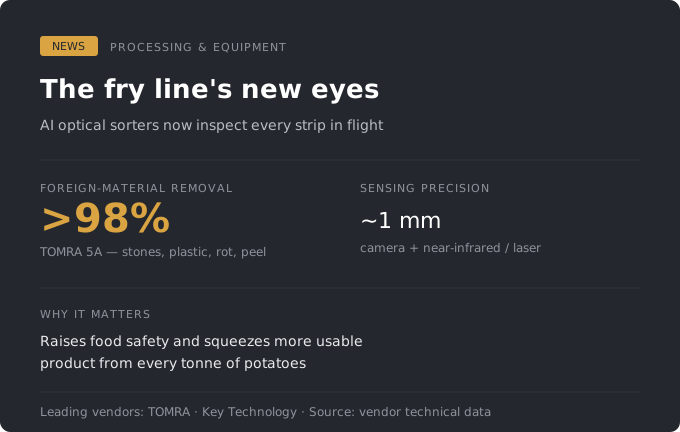
The numbers from the leading vendors are striking. TOMRA reports its 5A potato sorter removes foreign material at a rate above 98%, with detection precision down to roughly 1mm, while holding good-product loss to under about 1% in some setups. Its newer machines use multispectral imaging and 360-degree inspection; competitor Key Technology (part of Duravant) markets dedicated automatic defect-removal systems like the ADR X built specifically for potato-strip lines.
The "AI" part is increasingly central. Vendors train machine-learning models on large image datasets spanning many varieties, defect types and growing seasons. Better models mean the sorter is better at the hard part — telling a genuine defect from harmless natural variation — which cuts both false rejects (lost good product) and false accepts (a safety or quality miss).
Why it matters
For processors, optical sorting sits at the intersection of the two things that most affect the bottom line. On food safety, it catches the foreign material and spoilage that can damage a brand or trigger a recall. On yield, precise sorting rescues usable product that manual inspection would have thrown away — and in a commodity business, a percentage point of yield across millions of tonnes is real money. Modern sorters also feed data platforms that let plants analyse and tune performance over time.
The broader trend is consistent with where the whole sector is heading: automation and sensing pushing quality up and waste down, even as labour gets scarcer and quality expectations rise. Optical sorting won't make headlines the way a new plant does — but it is increasingly the invisible backbone of how a modern fry line hits its quality and yield targets.
Sourcing: technical specifications and accuracy figures are drawn from equipment manufacturers TOMRA Food and Key Technology, listed in Sources. Performance varies by product, defect type, machine configuration, and how AI models are trained on a given processor's conditions. Figures are vendor-reported.
